Sunday, 4 May 2014

Sasan Gir - Royalty of a different kind!

Leaving Ahmedabad at 8.30 am we reached Sasan Gir in the afternoon at 3.15pm. A distance of just over 425 kms excellent roads throughout via Limdi, Rajkot, Gondal, Junagadh, Gir. The entry into Sasan town was like entering any village... Small and dusty. Along the way one saw many lodges and new hotels. Our Lion Safari Lodge was actually down a very narrow rut carved lane with small huts alongside. Past a small cemetery, it suddenly opened out into a wider road. The tented camp was across a bund type road of a small stream.
Lion Safari Camp. 4 star luxury. Superb service

Our friends
The hot shower area
what more could I want? 
the most important room

When we had booked the tented camp, my imagination ran riot as to what it would be like.   Frankly, my inner thought was it would be an actual tent but with cots. it turned out to be luxurious as he photos show
There were 22 tents beautifully laid out across well maintained lawns in a 'w'  shape. Each tent had a large room fully equipped with all mod cons. The bathroom had a geyser and sink and flush toilet. Very comfortable. We had excellent meals, with a well laid out buffet. Ample choice for veggies and a non veg item too. Fish was available and the chef did his best for us. The staff, under their young but efficient Manager Ajay Kumar Behera, is extremely polite, helpful and committed to serving guests. Mr Behera runs a tight ship, everything well organised. Its a great place to stay, except guests need to realize that tents are made of fabric and not brick and mortar - my fellow Gujjus tended to forget that especially in the mornings when at 5.00 am they were all gathering each other raucously for the early safari and we were trying to sleep.

As we had reached mid afternoon, after a cuppa tea, we decided to go birding with our guide Bachu Singh, a very experienced 'bird man'; we had been given his reference by the BNHS, Mumbai. (Contact Bachchu Singh, Naturalist- Cell # +91 85029 72499 or
bs.birdwatching@yahoo.com). 
We spent nearly two hours being introduced to various types of birds. I had never seen so many species and especially understanding their peculiarities and needs was a real education. Bachu Singh has a keen eye and knew bird calls galore. If it wasn't for him, we would not have appreciated the beauty of the jungle. Despite a lack of binos, we had a good time learning.

View right by the Lion Safari camp
We crossed the bund, walked across the boundary of the river bank and saw many species, but no crocodiles who are also said to inhabit this area.
an egret cooling its feet

When on such a trip, whentime is restricted, my theory is to finish the objective asap and then have free time. Never keep to the end as something may come up and one will miss out on the original objective. So we planned the morning and evening safaris in such a way that if we were really happy with the lion sighting, we would avoid the morning safari: essentially as it was at an unearthly hour!


The rules clearly laid out ! 
9.30 – 11.45 Devaliya Camp safari next day. This is a safari within a closed enclosure and its taken by bus. We all assembled at the safari main gate and took a bus into the enclosure. Lots of families, all unaware of the need for silence in a safari camp! Sitting upfront was helpful as when we came to the lions, the driver helped me by ensuring we stayed those few extra minutes for me to take some photos. There were many deer, especially does, in the undergrowth. The land was harsh. Dusty and with limited green cover, more like bushes which were dying due to lack of water.

the permits issued to us


the land is dry and dusty. Little greenery


Just there whilst taking a turn we saw a large cage. Inside two leopards were kept. One pacing  silently alongside the fencing, up and down, and the other lying down. The youngsters in the bus suddenly came alive and called out to each other to take photos. Further down we saw our first view of the Big Cat! 


                                                    Hidden by brush, the bus waited some 50 ft away whilst we all had photo ops. The lion majestically got up, walked around and went to his brother who was lying some feet away. The drivers are under instruction not to disturb the lions so not only did we not wait too long but we were quite far away.

There was another lion a bit far away who was just not interested in us. He lay fast asleep. Lions spend most of their rime sleeping, I am told that they hunt for four hours or so and then sleep.


Disturb me not ! 

The evening safari was a disaster for us. We had chosen what everyone said was the best route. The jeep was with a few others and whilst we went up and down the trails, we did not see a single lion.


We saw deer, and many birds. No lions. At the very end, near the gates, the jeeps stopped near a clearing. There was a lion asleep.
Ah, to be a lion and laze all day! 
Who stole my paw prints? 
 The Safari supervisor in his jeep was regulating the visitor jeeps. We had hardly arrived and whilst I was focussing my camera, he instructed us to move on. I was furious as the driver immediately moved. I had just this one photo above. My friends had just about risen from their seats to have a look. If the driver had stopped at my instructions to wait, he and the guide would have been penalised by the authorities, no tourist for 15 days. This effectively cuts off their livelihood. So, they have to obey promptly.

Yes, those were mine!!
The early morning safari was an experience. The nights were cold in late January. Nearly  2 degrees. Early morning wake up at 4.30 am for departure at 5.30 am was tortuous. Wrapped up in windcheaters and caps, our group got a jeep to the Safari camp office. We collected our tickets and changed jeeps and ensured we got a good guide. This is critical as the team of guide and driver are the key to your successful safari. I was told that it’s better to acknowledge their work in advance rather than afterwards so they are motivated. The park gates open at 6 am. There are a limited number of routes. So we chose route 7, hoping we would get better sighting.
The reflectors of the jeep light up our view at 5.45am! 

Waiting is par for the course. Patience is critical.
It was cold and dark. In our route, we were the only ones. Others went different routes. This is a blessing as if we saw lions, we would not have a crowd of jeeps. It was cold. Luckily our jeep had a top half cover which gave me protection from the bitterly cold wind. My friends sat in the uncovered half and as they were hardy Brits, I had no qualms or guilt in asking them to sit there. As after all, if we saw lions, they were in direct lion of sight. I would have to stand to see! 


The safari timing was 6 to 9 am. It was pitch dark. One could not see anything. Except for the reflection from the dipped head lights, we were in darkness. As light gradually dawned, birds and monkeys could be heard. It was an awesome feeling being in thick jungle and not being able to see anything. Frankly I don't know why they start safaris so early as you can’t see anything!
Our friend waiting patiently to move on! 

At 7 am, having just undertaken a slow round of part of the circuit, we stopped with some other jeeps for a pit stop. The drivers exchanged notes and due to the beneficence of cell phones, tried getting info on lion sightings. We waited and waited in the jeep, nearly 45 minutes.  


We were 30 feet behind the forester and see how close he is to the lion!

Then onwards alone again. Suddenly the driver got thru to someone who asked him to rush if he wanted to see a lion. Turned out that our driver knew a ranger who was tracking a lion. The distance must have been quite a few kilometres as it took us sometime to reach the ranger. The rules are strict. There are speed limits. Our Schumacher told us to hold on. My friends bent low to avoid the overhead branches as we sped fast over bumps and rutted tracks.

Then, in front, we see a ranger leading his motorbike. Not driving it, just leading it. Right up front of him, was a male lion walking on the road. The distance between them was hardly 50 feet. We were about 30 feet behind the ranger in total silence. This silent procession continued for nearly 3/4 kilometre.


That was my photo up there at the top. did you like my scars? 
The path curved and we followed solemnly. Then the lion stopped, deciding to move into the brush. A raised hand and we stopped. Suddenly from the opposite side a jeep approached. The ranger stopped them. The lion moved into the brush, followed by the ranger. We waited hoping that we would see the lion. After a few minutes, whilst the lion crossed the brush parallel to us, the ranger indicated we should proceed towards him. Off road. Both jeeps slowly did so. This was our moment of glory. For a full five minutes, whilst the lion walked and then sat and stretched, we photographed him and watched him. He was hardly 40 ft away. It was magical as if he and the ranger understood each other. Why else would he have allowed the ranger to follow him, never a turn or look back, for nearly one km. When the ranger signalled us to leave, we left immediately as we did not want to upset the lion or the ranger for their graciousness.


Story of the lion that escaped!!
The way back was in silence. Each if us reflecting on this moment. We came across some crocodiles in the small lake. At the office where we changed jeeps, we found that the other groups had no luck, no sightings at all. We had been really lucky, especially as our permit was far more expensive than for locals, due to my foreign friends requiring to pay the extra fee. Considering that there is an excess of lions, where are they? Why does the tourist not see them? It shows that the jungle cover is really good. The lions walk within their own areas, in the jungle, we can’t see them. Our driver said that he had heard about a lion which had been seen in a village, been caught and had escaped just that morning! See the article. 
So, Gir was successful despite the early misfortune of not seeing any lions in the first round! 


Text and photographs copyright of the author. No part of this article or photographs maybe transmitted or reproduced by any means, electronic, mechanical, photocopying or otherwise, without written permission. Do contact the author on email -- helpthesun@gmail.com

Thursday, 1 May 2014

Heritage in the Jungle? Visit Laos and its UNESCO Heritage sites

The rush hour occurs when school ends and students fill the streets with bicycles.


Sunset on the ancient ruins by the mighty River Mekong ... Laos is a country where time has no meaning. Like Myanmar, the lack of foreign influence offers travellers an unparalleled glimpse of traditional SE Asian life. From the fertile lowlands of the Mekong River valley to the rugged Annamite highlands, travellers who have made it to Laos agree that this country is the highlight of South-East Asia. Laos is the least developed of the former French Indo-Chinese states. Due to a ruinous sequence of domination, conflict and socialism which ruined the country in the 1970s and years of isolation, Laos is now stabilizing, enjoying peace and admitting foreigners.

I was at Ubon Ratchathani, Eastern Thailand, visiting the Cambodian ruin of Prasat Vihearn, 100 years older than Angkor Wat and only seen from the Thai side. The A.C. coach from Ubon to Pakse (Laos) goes via Siridhon Dam to Khong Mek, (Thai border) and onto Van Tao / Pakse. The scenic route along the length of the dam is bordered by paddy fields and forests. You notice the differences on each side of the countryside due to the economies of the two countries.

Lao Border police issue visas for US$30, but ask for Thai Baht 50 as their fee for giving your own passport back! On the way back, when I insisted on a receipt, he pointed at a notice stating the fee for overtime work after office hours. I was there at 11 am on a Wednesday morning. Seems familiar doesn’t it? Reminded me very much of home!!
 
Boarding the ferry
Three French ladies living in Paris and Champasak befriended me. As I was going to Champasak’s two UNESCO heritage sites, it made sense to go with them. I sat up front next to a French speaking tuk-tuk driver. 

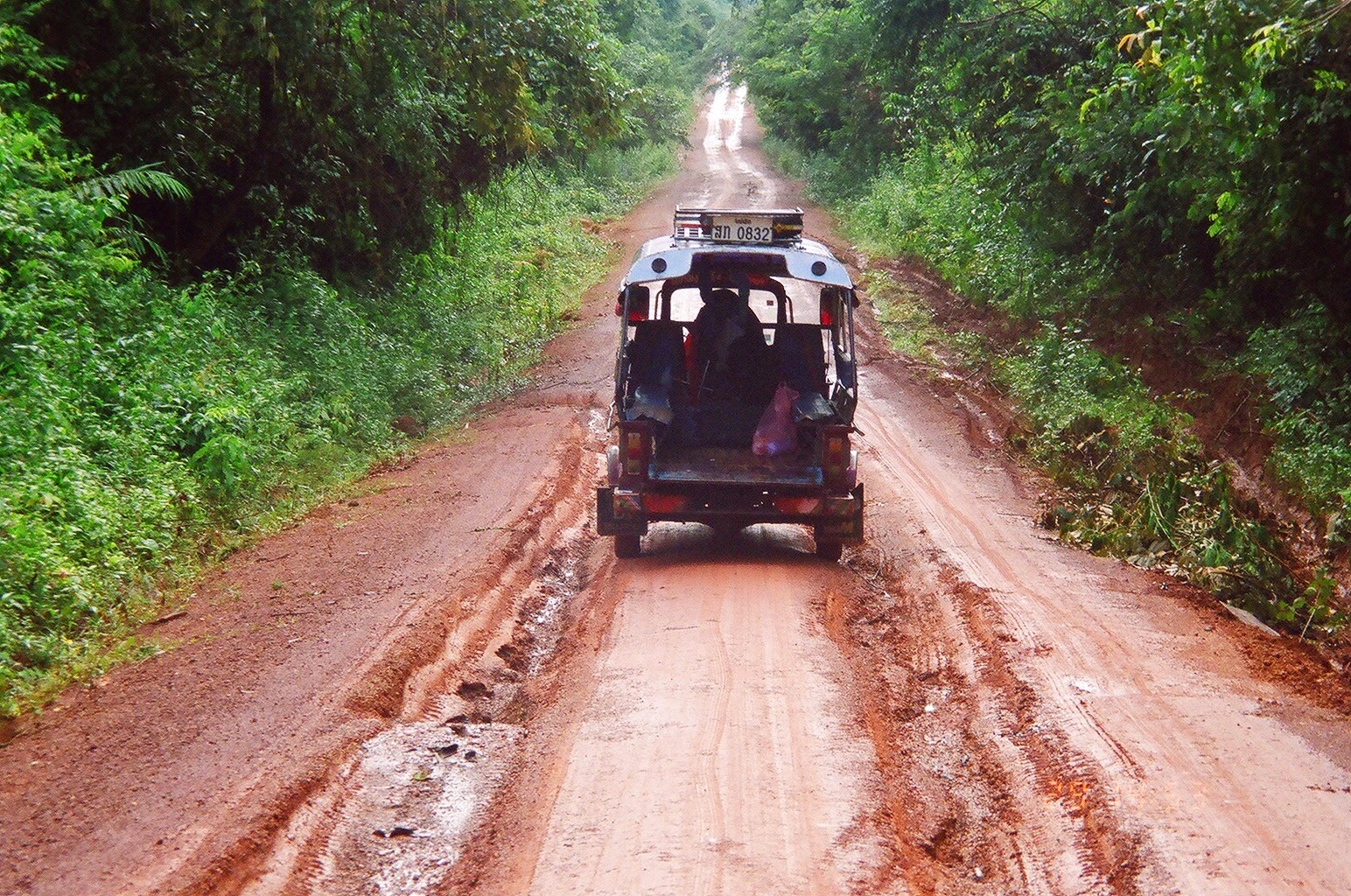
Watching the scenery for 19 km in a tuk-tuk before we hit the Mekong River was a balancing act on the small seat. A three-pontoon ferry takes us across the Mekong, known as Nam Khong locally, in all of 15 minutes. The actual process of boarding the ferry was driving onto thick wood boards over a wide muddy corrugated track. The ferry had to be manually push started off the mud bank!


I prefer centrally located hotels with friendly smiling staff, a general feeling of occupancy in the main areas, a room with a view and a spotless loo. Its amazing what you find sometimes - the larger hotels are often cold, uninviting places even though their furnishings may be the best. 

Thavasib Hotel, the only hotel in town!! 
I found a really nice place: turned out Thavisab Hotel was the only hotel -     US$ 10 for a really large A/C room, fridge, and clean loo with hot water. There were eight guest houses offering rooms from US$ 2 to US$10

CHAMPASAK is a one street 4 km long village - the Mekong on one side, fields on the other; at one end the technical institute, a third way up the ferry point, another third up the hotel and at the end is the ornate first entrance to Wat Phu which lies 8 km away. No bars, no massage parlours, no entertainment or restaurants as we know them; only Thai TV. What I call a cool place to chill out, doing nothing as Thai TV is worse than Indian TV. 

Wat Phu - an awesome single temple ruin far smaller than Angkor

note the moss and lichen on these steps!
The mountain top is swathed in mist until you get near - the Wat is invisible in the green forest cover. The main entry is some distance from the gate. Then comes a longish dogleg of a driveway and only as you start climbing, do you get an idea of all the ruins. The stones are dark and often with moss / lichen. Unlike the Cambodian Prasat Vihearn with a far steeper climb, the steps here are fewer but much more slippery as moss grows on the wet stones. 


Originally for Hindu worship and subsequently converted to a Buddhist temple, Wat Phu’s history is unclear. It was the site of a temple of the Khmer Empire that eventually made Ankor Wat its capital. Wat Phu, the most sacred religious site in Southern Laos, dates to the Chenla Period (6th-8thC) and later part of the Khmer Angkor Empire (9th-13thC).   Situated at the base of Phu Pasak (Pasak Mountain), Wat Phu ascends in three levels up the side of the mountain to the main temple sanctuary commanding breathtaking views.  Wat Phu is shaped to express the Hindu vision of the relationship between nature and humanity, using an axis from mountain top to river bank to lay out a geometric pattern of temples, shrines and waterworks extending over 10 km. The site nowadays is a centre of Theravada Buddhist worship. Historians say the Khmers chose this site because of a natural spring flowing from the top of the mountain and because the peak of Phu Pasak resembles Shiva’s phallus. 

 UNESCO in 2002 listed it as a World Heritage site. In 2003, the Archeological Museum opened with more than 150 artifacts. On both sides are ruins of a temple complex. Unlike Prasat Vihear in Cambodia, which has mine fields outside the cleared zone, here you can walk around. Only when you start climbing, do you see two large man-made ponds, the ruins below, the long rows of pedestals lining the driveway to the original formal entrance and the huge trees typical of this area which are not visible when you first enter.

Phu Pasak may have been used for human sacrifices as the temple is divided in two parts. The lower part consists of two ruined palace buildings at the edge of a pond, which was used for ritual ablutions. The upper section, the temple sanctuary itself, once enclosed a large Shiva phallus (linga). It was later converted into a Buddhist temple but much of the original Hindu sculpture remains. The lintels feature various forms of Vishnu and Shiva as well as Kala, the Hindu god of time and death. The naga stairway is lined with plumeria (Dokchampa), the Lao national flower.

 The Wat has a large image and three smaller images of the Buddha. Simple but seriously dominating. I bought some joss sticks and flowers, lit them and spoke to Him. Maybe He listened!! I never anticipate so whatever happens is for the good. 


When you see the Wat from a distance, the glow from the Buddhas as well as the natural light is such that there is a yellow glow emanating from within the temple to the outside and the natural countryside colours seem to recede. It’s eerie and awesome!

ruins at the top level

Wat Phu Buddha shrine top level - Champasak 
At the top of the temple site are a number of carved rocks, resembling a crocodile, a naga (a Cobra) and an elephant. It is believed that these rocks were used for human sacrifice. There whole area is forested so most of it is impenetrable. Sitting at the top, I felt a real sense of happiness and elation at being in such a pristine divine place.

Next stop Phu ASA, the 18thC Khmer stone temple at Khiet Nuong on the 48 kms marker from Pakse / 30 kms from Champasak. The last 10 kms are over a heavily corrugated mud track, more suitable for elephants than tuk-tuks. 


At the elephant base camp, we had a 3 km uphill climb, but like the Malay rainforest, I was careful as the path is made of rocks and tree roots. One walks on one’s toes to ensure a confident step. Unfortunately, the minute we started from the base, it started drizzling right until we returned home.


The volcanic plate of Phu Asa is impressive.
at the top with ruins Phu Asa, Champasak  
The ground is made of huge black boulders pitted with holes, large flat pieces over 10 ft wide. A
collection of 15 six-feet high slate brick columns built with small stones placed on each other, arranged in a semi-circle on the crest of the hill. There is a central small ruin with in-growing trees and lichen. On the left side at the far bottom of the hill you see wild elephants in the wetlands. We walked back in the pouring drizzle: totally soaked.  On the way back, I felt a little wiggling on my right calf; lifting my trouser, I saw a leech enjoying itself! The guide saw it, shivered and started checking his pants; not once, but thrice!!


Wat Oumong trees reflection .  Champasak  
En route, is Wat Oumong, 5 kms off the main road, in deep forest. The trees are huge – over 150 feet in height and the way the trees’ roots curled around the small Wat’s ruins reminded me of Ta Phrom in Angkor. Nature is awesome but merciless. Nearby, there is a large pond which reflects the giant trees and their roots – an unforgettable image.


PAKSE OR PAKXE, the regional capital, at the confluence of the Xe Don (Sedon) and Mekong Rivers, halfway between the Thai border and the fertile Bolaven Plateau, is the south's biggest city and commercial / transport hub. It has wide boulevards, orderly traffic and its waterfront cafes are full of youngsters.


Pakse’s main tourist attraction is the Champasak Palace Hotel, a majestic structure resembling a giant wedding cake. The late Prince Boun Oum Na Champasak, heir to the Champasak kingdom and one of the most influential southerners of the 20thC, needed a palace to accommodate his many concubines. It is now a leading hotel with over 170 well furnished rooms, each looking out onto the river.

Champasak Provincial Museum houses fine examples of ornately carved pre-Angkorian sandstone lintels. There is also a selection of local tribes' costumes and jewellery. There are three markets in the city but the best is the very large and lively East Market. An interesting half day outing is to go across the river in a longboat to Don Muang - a very large island with many old style wooden houses on stilts and a path running right round it. The island crossing was not as exciting as my experiences on the Irrawaddy in Myanmar or the Mekong in Phnom Penh.


Most shops and offices in Pakse shut by 5.30 pm but the many private ground floor Mom & Pop shop-houses stay open till 11.00 pm. Late evening sees the riverside cafes, over 15 discos and bars busy.

I had walked around the whole day and found Jasmine, an Indian dhabha, owned by a Tamilian, a 16-year Laos veteran. His was the only popular eating place with people. Most people eat at the food barrows / stalls all over the city. Foreigners follow the herd instinct or their guide books. Rice is the staple food. Dishes are cooked with fresh vegetables, freshwater fish, poultry, duck, pork, beef or water buffalo. Lime juice, lemon grass and fresh coriander give the food its characteristic tang. Various fermented fish concoctions are used to salt the food. Hot chillies, garlic, mint, ground peanuts, tamarind juice, ginger and coconut milk are other seasonings.

My favourite memory is sitting by the river at sunset. Unforgettable! Lots of cloud cover and a hardly visible sun which gave way within minutes to no clouds and a brilliant golden yellow sun which later became maroonish red as the evening progressed and then gradually faded away. I look forward to many more sunsets in Luang Prabang and Vientiane!


FACTS AT A GLANCE

Full country name: Lao People's Democratic Republic
Area: 236,000 sq km (92,040 sq m)
Population: 4.75 million (growth rate 2.9%)
Capital city: Vientiane (pop 300,000)
People: 50% Lao Loum (lowland Lao), 30% Lao Theung (lower-mountain dwellers of mostly proto-Malay or Mon-Khmer descent), 10-20% Lao Sung (Hmong or Mien high-altitude hill tribes) and 10-20% tribal Thais
Language: Lao and Lao dialects (closely related to Thai), French
Religion: 85% Buddhist, 15% animist and spirit cults


How to get to South Laos
Air: A visa from Delhi to Vientiane.
Road: Thai and Lao coaches four times daily. Both coaches were first rate – brand new reclining seats, toilet, TV.  Lao gave free cold towels /free wafer biscuits.
When to Go The best time with less rain and less heat - November to February. For the mountains, it’s May and July. Roads may be washed out during July - October rainy season. Peak tourist months - December to February.
Accommodation
In Pakse, Champasak Palace Hotel; Pakse Hotel and many guest houses.  
Room rates depend upon the city and on the location of the room – panoramic, superior, standard or economy.
Must - See – * Bolaven Plateau - Laven Tribals for highly-regarded coffee in the world. Centre of Mon-Khmer culture with Alak, Katu, Ta-oy and Suay villages. *Khone Phapeng waterfalls are the largest waterfall in SE Asia, the East’s Niagara.

Major places to see

VIENTIANE (pronounced 'Wieng Chan') is laid-back and has interesting wats and lively markets. The most important monument is Pha That Luang (the Great Sacred Stupa) is a symbol of Buddhist and Lao sovereignty. Other sights - Wat Pha Kaew, a former royal temple; Wat Si Saket the oldest temple in Vientiane; the Morning Market. Wat Xieng Khuan is a collection of Buddhist and Hindu sculptures. Vientiane has many hotels and guesthouses. For good Lao meals, try the Dong Palan Night Market on the east bank of the Nong Chan ponds.

LUANG PRABANG’s main attractions are its historic temples - 32 of the original 66 built before French colonization. It has a lovely setting encircled by mountains at the confluence of the Khan and Mekong rivers. Royal Palace Museum, Wat Xieng Thong and Wat Wisunlat worth visiting. Nearby are the famous Pak Ou caves, some of which are filled with Buddha images.

Ho Chi Minh Trail War history lovers will like the Trail running parallel to the Laos-Vietnam border. It was used by Viet Minh & North Vietnamese. 1.1 million tons of explosives and massive quantities of herbicides were dropped by USA between 1965-69.

Getting Around the main roads are good. Bus services are limited. Rivers are the true highways of Laos. For long journeys, take diesel river ferries; shorter trips, hire a river taxi or longboat with an engine. There are taxis, tuk-tuks and Pedi cabs.

What to buy
·  Embroidered silk and cotton fabrics in piece good or sarong format. Champasak is famous for its nearby weaving village.
·  Lao coffee – strong and really refreshing. As good as Colombian and Vietnamese coffee.

Currency: the Kip - be prepared to handle a huge wad of old notes as Laos has no coins. You may pay in kip for cheap purchases, baht for mid-range buys, and dollars for expensive items in the countryside, US $ or Thai baht. Travellers cheques & credit cards are not preferred


Text and photographs are copyright of the author. No part of this article or photographs maybe transmitted or reproduced by any means, electronic, mechanical, photocopying or otherwise, without written permission. Do contact the author on email -- helpthesun@gmail.com

Saturday, 12 April 2014

Poi Sang Long: an Ordination ceremony for Buddhist Novice Monks - Wat Pa Pao Temple, Chiang Mai, Thailand

Wat Po Temple grounds


The place is crowded. No, it’s jam-packed. People of all ages everywhere with no separation between sexes. There is no space to move. When I walk, I am pushing one person into another, so that they squeeze their space to let me pass. Its the Wat Pa Pao temple, Chiang Mai, northern Thailand, where the Poi Sang Long ceremony is held every April. The crowd is unbelievable. Apart from the oppressive heat, the noise and the sheer number of people is just unbelievable. I have never seen anything like it and god forbid if there is a stampede. 

An Akha elder having a smoke! 
The temple complex is large: nearly 3/4 size of Oval maidan, Mumbai. In it, there is the main temple plus shrines and dormitories for monks. The ceremony conducted in the main hall in the presence of many senior monks has musical accompaniment and announcements blaring forth from loudspeakers. The cacophony of sound from the crowd and the ambience on this auspicious occasion is awesome.

Each  family sits in a circular group. Visible groups. Each family to itself. They sit with the young boy as the centre of attraction in each group. He is their idol; he is the hero of the day. After all, in two days time, at the end of this ceremony, he will go away from their lives for the next ten years atleast. So, they sit; they share food, they talk, some consume alcohol surreptitiously as after all we are in a temple, whereas others stroll around the complex looking at the food and clothes stalls. There is even a TV seller here! There is an air of festivity and cheerfulness.. each family wants to make it a grand affair by which to remember their son. 

There are seven major hill tribes in the Chiang Mai area: the Meo, Lisu, Lahu, Yao, Akha, Lawa and Karen. April is the annual time of the Poi Sang Long ceremony. It reflects the precious culture of the Thai Yai people, which is best seen in Mae Hong Son province. This is a Karen ceremony and the temple is full of Karens who have left Myanmar and taken refuge in Thailand, mainly in Mae Hong Son province, and western areas of Chiang Mai, Chiang Rai and Phayao. The Karen number 300,000 in Thailand, and over four million in Myanmar. There are four main subgroups - the Sgaw Karen (the most numerous), the Pwo Karen, the world- famous Padaung or “long-neck” Karen (see my Myanmar article) and the Kayah.

Novice monks at work 
Poi Sang Long is unlike any other ceremony of its type in the country. Young boys aged between 7 to 14 are ordained as novices to learn Buddhist doctrine – popular belief is that they will gain merit for their parents. Actually, it is a unique Thai interpretation, which is a win-win situation for parents, the children and Buddhism. These children are from very poor families, mostly   farming families, who cannot afford education and the children are destined for the family farming tradition. This is their way out – the child is around 6 to 7 years of age when he is given to Buddha. He will be a novitiate with the monks till 16 years of age. Then, he can continue to be a monk or he can return to normal life.  So, the child escapes into a life where he  receives a good education, given food and boarding all free in return for service to Buddhism. The parents don’t have the burden of bearing these costs. In turn, Buddhism gains young children as prospect monks for the future but definitely novices who can learn the religion and in return give service to the monks and the temple by performing menial tasks on the premises.

The origin of this festival lies in Buddhist tradition.... it is believed that Prince Rahula, Buddha’s own son, gave up the worldly life to follow his father’s footsteps.  Prince Rahula became the youngest ordained monk and the first novice in Buddhism. Subsequently, it became a tradition that young boys should ordain to learn the teachings of Buddha. Due to the reverence given to Buddhism, the people believe that the celebrations should be as grand as possible.

In true Thai architectural design style, the temple precinct has a long hall under a multi-tier red tiled roof. The hall on the first floor has steps leading to it from both ends so that the vast crowd can enter easily. In the lower courtyard, there are big blue and white stripes tents providing shade to the families. Actually under this outer cover, there is a red inner layer with bright orange, yellow, red and green fabric buntings running around the border. 

Flower money!
Multi-coloured balloons hang all over. To the rear of the temple building are the food and shop courtyard. Tantalizing smells arise from the Bar-B-Q items. Many vendors sell plastic bags full of crushed ice with tea or coffee. Children eat sticky sweets like children the world over. There are an incredible number of teenagers present… groups of young girls mix with the young men in jeans and T shirts or lovers sitting quieting, talking together in whatever shaded area they can find.

The colours in the room hit your eye as Karen women dress very attractively and in a distinctive style. Unmarried girls wear loose white V-necked shifts, decorated with Job’s Tear seeds at the seams. Married women wear blouses and skirts in bold colours, predominantly red or blue. Men wear blue baggy trousers, with typically red-striped shirts, a simplified version of the women’s blouses. The middle aged and elderly men wear sombre shirts with a red cummerbund or headscarf.

Each ethnic group has a unique range of styles and colours particular to it. Considerable time, pride and imagination are exercised in the design & production of clothes and jewellery as these are an expression of status, pride and art.  Many women still wear traditional costume, but the men and children are adopting western shorts, jeans and T-shirts for everyday wear.

The festivities last for three days. The Mayor officially opens the ceremony with a procession from Tha Pae West Gate to the Wat Pa Pao. This is essentially to create the hype for tourists and locals as well as to get the families together.  On the first day, the boys’ heads are shaved.  The tonsure ceremony is serious business, as after this, the initiate cannot stand on the ground. He has to be carried by somebody until the final ceremony on the 3rd day. Whether it is for general walking around or going to the bathroom, he will be carried or has to stand on a chair. His feet must never touch the ground.  Just imagine that for three full days and nights, where ever he goes, his feet cannot touch the ground. It is an awesome responsibility on the family. 
Come on, I Am NOT that heavy! 

Tonsured and pre-bath
Luk Kaew or Jewel Son
The boys are then bathed and anointed with special holy water and dressed up elegantly and colourfully.. The piece de resistance is the facial make up which takes a lot of time as its complicated, using rouge, blush-ons, small bindies and decorative paint work. The faces are superbly made-up to resemble girls rather than young boys. The shaved head is covered with a red headband. The clothes consist of a red, pink or yellowish green robe with a lot of shiny embroidery. Looks rich even if it is not heavy expensive fabric.
Family Group for the Sang Long - a very auspicious occasion

On his head, the child wears a headdress with plastic flowers in white and pink. There is a desire that each child should outshine the other in dress and make-up. Bead necklaces and a waistband make up the rest of the glittering gear. Often the child falls asleep due to sheer exhaustion, as after all he is only around seven years old. By now, the boys are known as Sang Long or Luk Kaew or Jewel Sons. Its easy to understand why as the faces are really bejewelled.

The Long Drum 


  On the second day, a procession is held displaying the offerings for the monks. Around each family area, there are paper flowers full of money trees.  Gifts in brightly coloured paper are wrapped and kept on the side. These are for the monks as a donation to be given by each proud family. 
 

 At around 4.00 pm, to the sound of a long drum and a seven piece cymbal set, the dressed up children, each on the shoulder of an adult, are called to the central lower courtyard. The adults are dancing in a two-step style with the child swaying away. In addition, there is a large paper umbrella, with golden yellow designs on it, being carried by a family member so that the child’s head is shaded from the hot sun. The noise is simply unbelievable. The monks address them through the sound system, which competes with the drums, which in turn competes with the general conversation of the vast crowd. The monks read out the offerings and then the procession winds it way around the temple three times.

 Naturally the same adult cannot carry the child all the time so you find suddenly a child’s legs being heaved up and around a man’s shoulders followed by the body so that there is no break in the dance or in the child falling down. 
As the procession goes round the temple, the crowd throws rice on the group as an auspicious sign. 

The final round around the temple
After the third round, the place suddenly becomes quiet and the crowd fades away with the child and his family staying in their area in the tent. 

On the third day, there is an air of sombreness. This is the final day. The child now wears the yellow / orange single piece uniform of a novice monk. He has a black bead necklace around his neck. With his tonsured head, he looks very serious and no longer like the child of the day before when he entered the temple grounds.  The novices’ play enthusiastically with the gifts they have received from family members: some have battery-powered cars, others with hand held computer games. Others just run around chasing each other.  The procession once again proceeds through the town and the boys are taken to the temple for the formal ordination ceremony.  By the time it's evening, there is a general air of clearing up. Within the space of two hours, the families have totally cleaned up the garbage lying around and the decorations used for the ceremony. 
Novice monks ready to leave 

Thus comes an end once again to the annual ceremony of gifting one’s child in the service of the Lord Buddha. In this deeply religious country, it is a continuing act of faith from generation to generation. It is a wonderful way to keep the religion alive when other religions the world over face great difficulty in collecting a congregation. It is a sight worth seeing as one never knows how long such traditions will continue. 


Text and photographs copyright of the author. No part of this article or photographs maybe transmitted or reproduced by any means, electronic, mechanical, photocopying or otherwise, without written permission. Do contact the author on email -- helpthesun@gmail.com

My Artworks and the Indian Cancer Society


The Indian Cancer Society has its preview of their annual art exhibition curated by Nayanna Kanodia. Each year the Society raises funds for their cause through various means. This Art Exhibition is one of the major fund raising events of the Year.


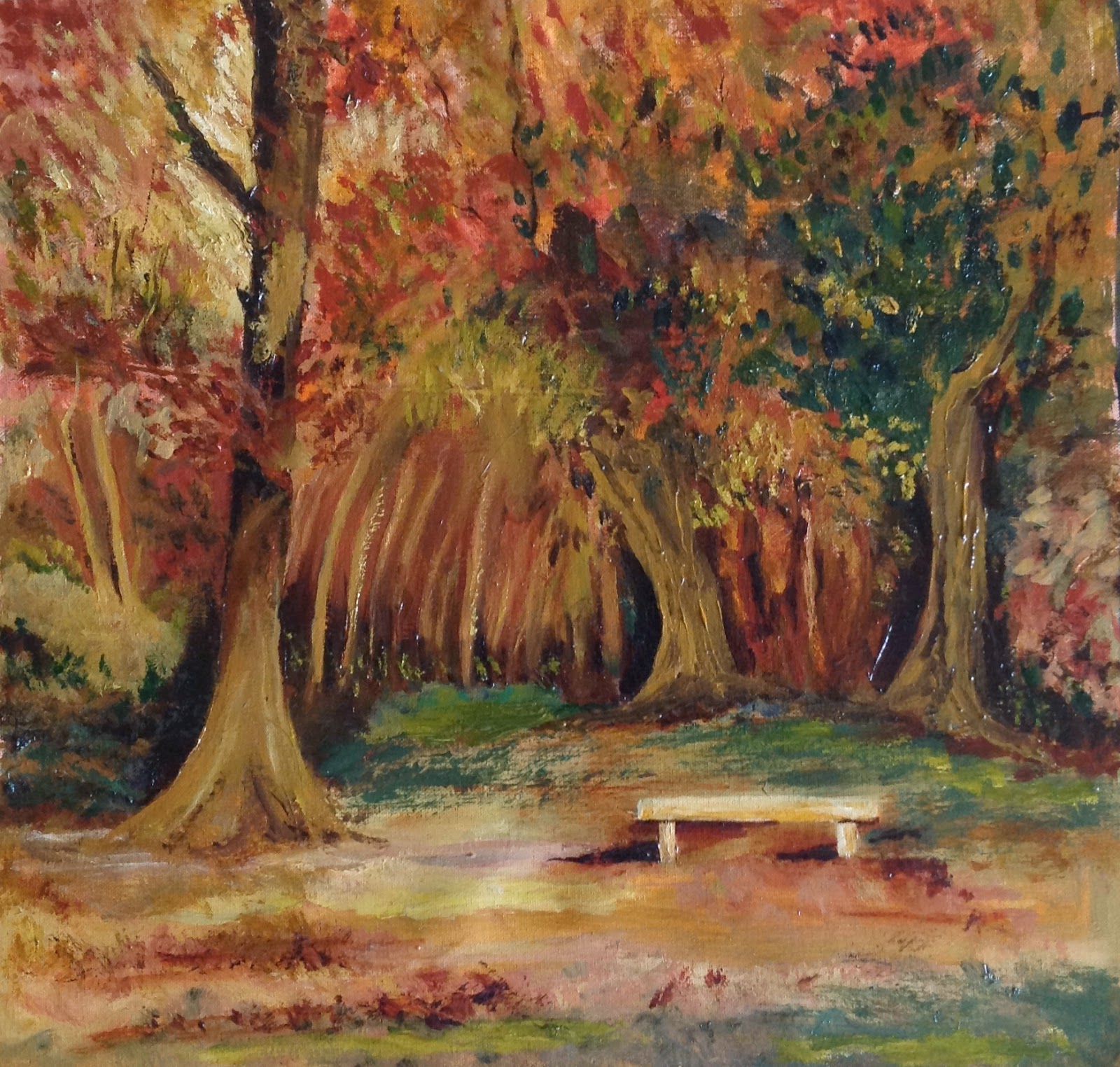
Two of my works, The Bench and The Watermill have been selected as part of the art exhibition featuring 26 artists and 46 art works. 
So, please do come if you are in Mumbai.


Preview Date: Monday, 14th April 2014 Time: 6.30 p.m

General viewing: The paintings will be on view from 15 - 18 April 2014 
Time: 11.00 a.m. to 7.p.m. 

Venue: Gallery Art and Soul, Madhuli, Shivsagar Estate, Dr. A.B. Road, Worli, Opp. Atria Mall, Mumbai 400018


Text and photographs copyright of the author. No part of this article or photographs maybe transmitted or reproduced by any means, electronic, mechanical, photocopying or otherwise, without written permission. Do contact the author on email