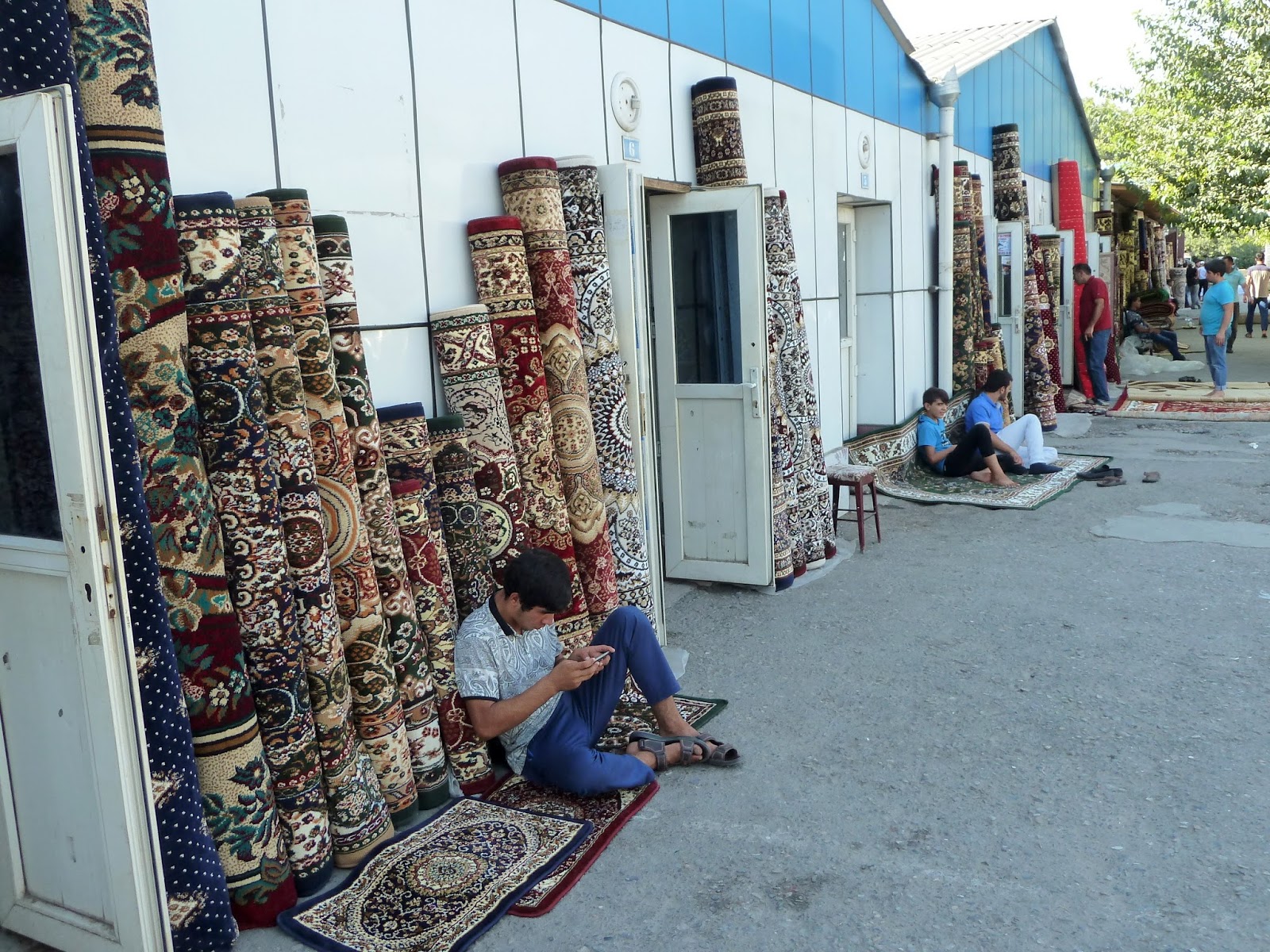
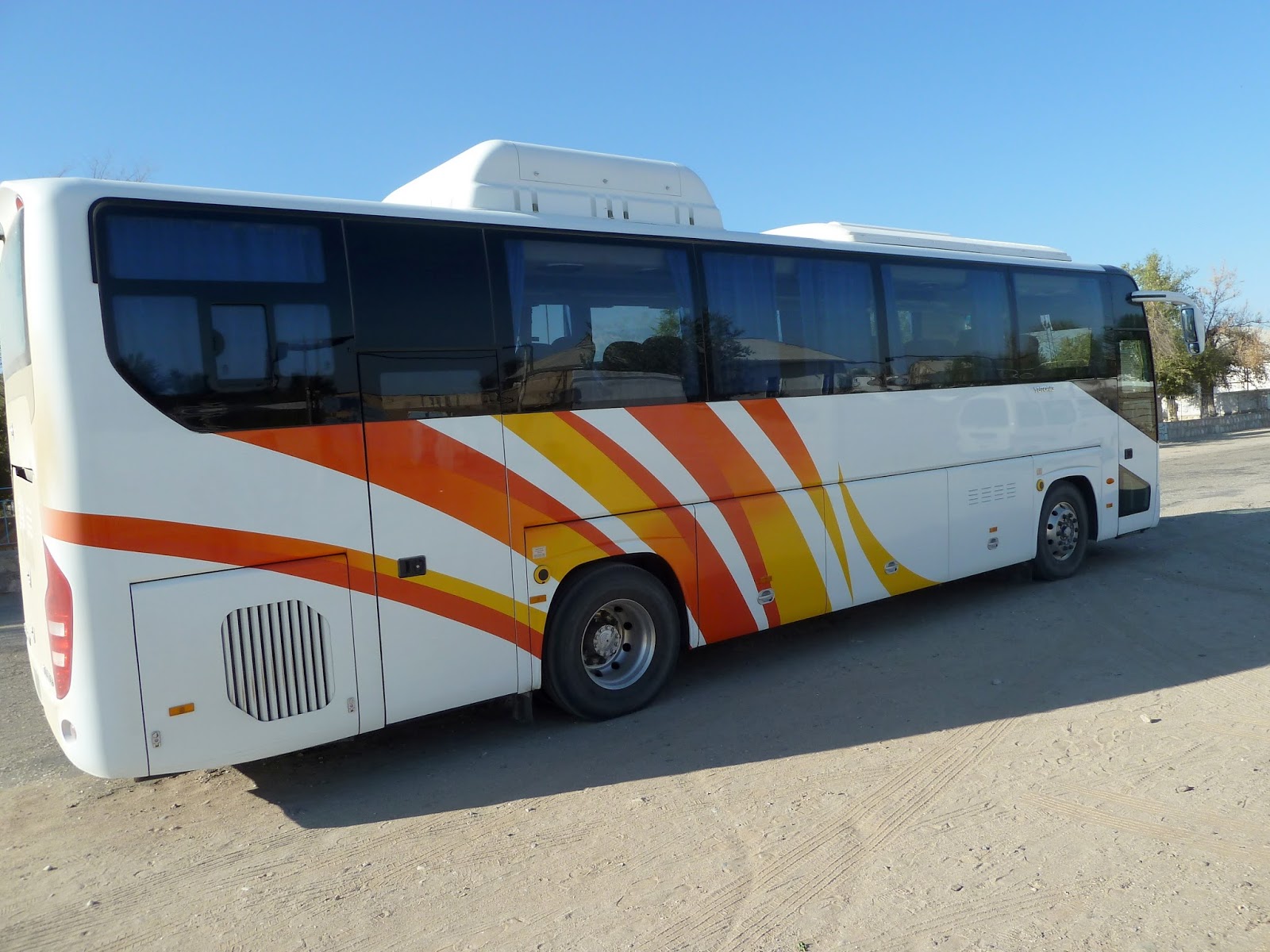
 Bukhara or Bokhara has been
always on my bucket list with Samarkand and Tashkent. It is a city one can
visit at any time and any number of times due to its history, its beauty and
its antiquity. Life moves at its own pace here. Humans have inhabited the
region around Bukhara for at least five millennia, and the city has existed for
half that time. The mother tongue of the majority of people of Bukhara is Persian. Located on the Silk Road, the city has long
served as a centre of trade, scholarship, culture, and religion. UNESCO has listed the
historic centre of Bukhara (which contains numerous mosques and madrassas) as a World
Heritage Site.
Bukhara or Bokhara has been
always on my bucket list with Samarkand and Tashkent. It is a city one can
visit at any time and any number of times due to its history, its beauty and
its antiquity. Life moves at its own pace here. Humans have inhabited the
region around Bukhara for at least five millennia, and the city has existed for
half that time. The mother tongue of the majority of people of Bukhara is Persian. Located on the Silk Road, the city has long
served as a centre of trade, scholarship, culture, and religion. UNESCO has listed the
historic centre of Bukhara (which contains numerous mosques and madrassas) as a World
Heritage Site. It is now
the capital of Bukhara Region of Uzbekistan. During the golden age of the Samanids, Bukhara became a major intellectual centre of
the Islamic world, second only to Baghdad. As an important trading centre, Bukhara was home to a
community of medieval Indian merchants from the city of Multan (modern-day Pakistan) who were noted to own land in the city.
It is now
the capital of Bukhara Region of Uzbekistan. During the golden age of the Samanids, Bukhara became a major intellectual centre of
the Islamic world, second only to Baghdad. As an important trading centre, Bukhara was home to a
community of medieval Indian merchants from the city of Multan (modern-day Pakistan) who were noted to own land in the city.
Bukhara is situated
on a sacred hill, the place where sacrifices were made by fire-worshippers in
springtime. This city was mentioned in a holy book "Avesto". Bukhara
city is supposed to be founded in the 13th cent. B.C. during the reign of
Siyavushids who came to power 980 years before Alexander the Great. The name of
Bukhara originates from the word "vihara" which means
"monastery" in Sanskrit. The city was once a large commercial centre
on the Great Silk Road.


 There is a small park and a metal sculpture of Nasruddin Hodja, the quick-witted and warm-hearted man, who forms the central character of many children's folk stories in Central Asian, Afghanistan, and Pakistan, sitting atop his mule with one hand on his heart and the other with an 'All OK' sign above his head..
 Bukhara lies west
of Samarkand and was once a centre of learning renowned throughout the Islamic
world. It is the hometown of the great Sheikh Bakhouddin Nakshbandi. He was a
central figure in the development of the mystical Sufi approach to philosophy,
religion and Islam. In Bukhara there are more than 350 mosques and 100
religious colleges. Its fortunes waxed and waned through succeeding empires
until it became one of the great Central Asian Khanates in the 17th century.
Bukhara lies west
of Samarkand and was once a centre of learning renowned throughout the Islamic
world. It is the hometown of the great Sheikh Bakhouddin Nakshbandi. He was a
central figure in the development of the mystical Sufi approach to philosophy,
religion and Islam. In Bukhara there are more than 350 mosques and 100
religious colleges. Its fortunes waxed and waned through succeeding empires
until it became one of the great Central Asian Khanates in the 17th century.
Like Rome, Bukhara with more than 140 architectural
monuments is a "town museum" dating back to the Middle Ages. 2,300
years later, ensembles like Poi-Kalyan, Ismail Samani Mausoleum, the Ark,
Lyabi-Khauz are attracting a lot of attention. The city consists of narrow
streets, green parks and gardens, historical and architectural monuments belong
to the different epochs, but locate very close to each other.
The main square in Bukhara is attractive as it
is wide and large. At one end is the street which progresses from one end to
another. Across it is the small artificial lake with the restaurant and its
540+ year old mulberry tree. The restaurant has excellent food. If you go from
the street to one side you come across one of the most ancient archaeological
sites of the city.

This is a cute little building tucked away in bye-lanes. The four
towered structure is mistaken for a gate to the madrassa. Its functions are to
provide ritual and shelter. The main edifice is a mosque. The building’s cupola provides
good acoustic properties and therefore takes on special significance of
'dhikr-hana' – a place for ritualized 'dhikr' ceremonies of Sufi,
the liturgy of which often include recitation, singing, and instrumental music.
On either
side are dwelling rooms, some of which have collapsed, leaving only their
foundations visible. Each of four towers has different deco rational motifs.
Some say that elements of decoration reflect the four religions known to
Central Asians. One can find elements reminiscent of a cross, a Christian fish
motif, and a Buddhist praying-wheel, in addition to Zoroastrian and Islamic
motifs. On the esplanade to the right
from Char-Minar is a pool, likely of the same age as the rest of the building
complex. Char Minar is now surrounded mainly by small houses and shops along
its perimeter.
 The most famous of all the
monuments is the Po-i-Kalan complex; It is
vast. The title Po-i Kalan (also Poi
Kalân meaning the "Grand Foundation"), belongs to the
architectural complex located at the base of the great minaret Kalân
known as Minâra-i Kalân or Tower
of Death as according to legend it is the site where criminals were executed by
being thrown off the top for centuries.
The most famous of all the
monuments is the Po-i-Kalan complex; It is
vast. The title Po-i Kalan (also Poi
Kalân meaning the "Grand Foundation"), belongs to the
architectural complex located at the base of the great minaret Kalân
known as Minâra-i Kalân or Tower
of Death as according to legend it is the site where criminals were executed by
being thrown off the top for centuries.
“The minaret is
most famed part of the ensemble, and dominates over the historical centre of
the city. The role of the minaret is largely for traditional and decorative
purposes - its dimension exceeds the bounds of the main function of the minaret
which is to provide a vantage point from which the muezzin can call out people
to prayer. For this purpose it was enough to ascend to a roof of mosque. This
practice was common in initial years of Islam. The word "minaret"
derives from the Arabic word "minara" ("lighthouse", or
more literally "a place where something burn"). The minarets of the
region were possible adaptations of "fire-towers" or lighthouses of
previous Zoroastrian eras.
The architect, whose name was Bako designed the
minaret in the form of a circular-pillar brick tower, narrowing upwards. The
diameter of the base is 9 meters (29.53 feet), while at the top it is 6 meters
(19.69 feet). The tower 45.6 meters (149.61 feet) high, and can be seen from
vast distances over the flat plains of Central Asia.
Standing in the centre square of the complex, one
is in awe at the grand style of each of the structures in this complex.
 Masjid-i
Kalân was completed in 1514 and surely is equal to the Bibi-Khanym Mosque in Samarkand in size.
The mosque is able to accommodate 12,000 believers. Although Kalyan Mosque and
Bibi-Khanym Mosque of Samarkand are of the same type of building, they are
different in terms of art of building. 288 monumental pylons serve as a support
for the multi-domed roofing of the galleries encircling the courtyard of Kalyan
Mosque. The longitudinal axis of the courtyard ends up with a portal to the
main chamber (maksura) with a cruciform hall, topped with a massive blue cupola
on a mosaic drum. The edifice keeps many architectural curiosities, for
example, a hole in one of domes. Through this hole one can see foundation of
Kalyan Minaret. Then moving back step by step, one can count all belts of
brickwork of the minaret to the rotunda”.
Masjid-i
Kalân was completed in 1514 and surely is equal to the Bibi-Khanym Mosque in Samarkand in size.
The mosque is able to accommodate 12,000 believers. Although Kalyan Mosque and
Bibi-Khanym Mosque of Samarkand are of the same type of building, they are
different in terms of art of building. 288 monumental pylons serve as a support
for the multi-domed roofing of the galleries encircling the courtyard of Kalyan
Mosque. The longitudinal axis of the courtyard ends up with a portal to the
main chamber (maksura) with a cruciform hall, topped with a massive blue cupola
on a mosaic drum. The edifice keeps many architectural curiosities, for
example, a hole in one of domes. Through this hole one can see foundation of
Kalyan Minaret. Then moving back step by step, one can count all belts of
brickwork of the minaret to the rotunda”. 


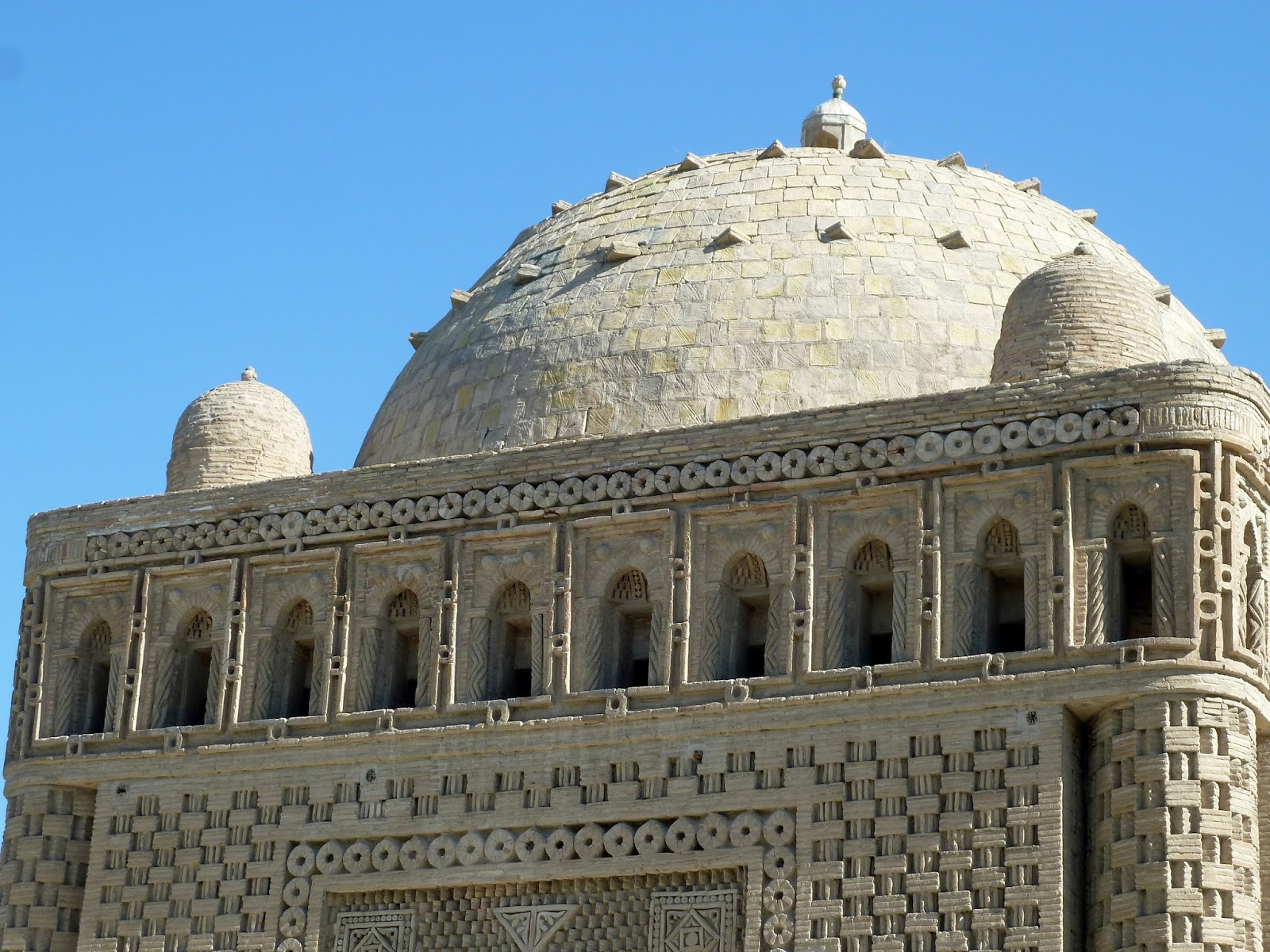

Ismail Samani’s mausoleum is an exquisite example of Central Asian architecture. Built in the 9th C (between 892 and 943) as the resting-place of Abū Ibrāhīm Ismā'īl ibn Aḥmad, May 849 – November 907,aka Isma'il ibn Ahmad and popularly as Ismail Samani. He was the Samanid emir of Transoxiana and Khorasan and his reign saw the emergence of the Samanids as a powerful force. It was the last native Persian dynasty to rule the region in the 9th / 10th C. after the Samanids established virtual independence from the Baghdad Caliphate.

 The site is unique
for its architectural style combining both Zoroastrian and Islamic motifs. The
building's facade is covered in intricately decorated brick work, which
features circular patterns reminiscent of the sun - a common image in
Zoroastrian art from the region at that time which is reminiscent of the
Zoroastrian god, Ahura Mazda represented by fire and light. The building's
shape is cuboid, and reminiscent of the Ka'aba in Makkah, while the domed roof
is a typical feature of mosque architecture. The syncretic style of the shrine
is reflective of the period - a time when the region still had large
populations of Zoroastrians who had begun to convert to Islam.
The site is unique
for its architectural style combining both Zoroastrian and Islamic motifs. The
building's facade is covered in intricately decorated brick work, which
features circular patterns reminiscent of the sun - a common image in
Zoroastrian art from the region at that time which is reminiscent of the
Zoroastrian god, Ahura Mazda represented by fire and light. The building's
shape is cuboid, and reminiscent of the Ka'aba in Makkah, while the domed roof
is a typical feature of mosque architecture. The syncretic style of the shrine
is reflective of the period - a time when the region still had large
populations of Zoroastrians who had begun to convert to Islam. 


The shrine is also regarded as one of the oldest monuments in the Bukhara region. At the time of Genghis Khan's invasion, the shrine was said to have already been buried in mud from flooding. Thus, when the Mongol hordes reached Bukhara, the shrine was spared from their destruction. The mausoleum of Pakistan's founding father Muhammad Ali Jinnah was modeled after the shrine.
Bolo Haouz Mosque is a historical mosque with 20 columns carved from rather tall trees! Built in 1712, on the opposite side of the citadel of Ark in Registan district, it is inscribed in the UNESCO World Heritage Site list. It served as a Friday mosque during the time when the emir of Bukhara was being subjugated under the Bolshevik Russian rule in 1920s. Thin columns made of painted woods were added to the frontal part of the iwan in 1917, additionally supporting the bulged roof of summer prayer room. The columns are decorated with coloured muqarnas.


Though this is a functional mosque the rooms are used for
various purposes. There are many where artists, silversmiths, wood carvers, and
other specialists ply their trade.

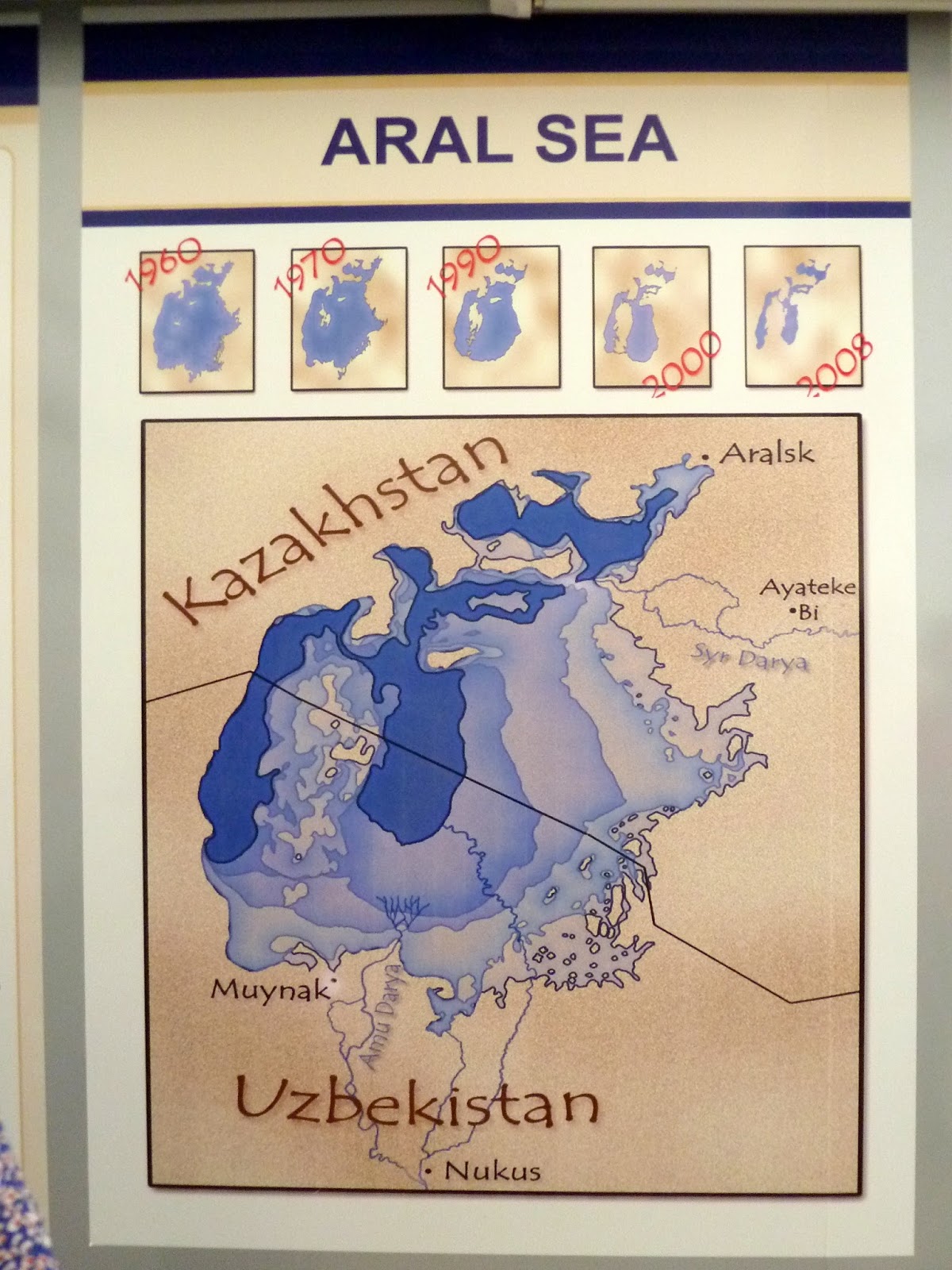
We visited this small museum in Bukhara which is about its water
resources and how it was obtained over the centuries.


Text and photographs copyright of the author. No part of this article or photographs maybe transmitted or reproduced by any means, electronic, mechanical, photocopying or otherwise, without written permission. Do contact the author on email -- helpthesun@gmail.com